
CTE Can Only Be Confirmed After Death. Scientists Are Trying to Change That
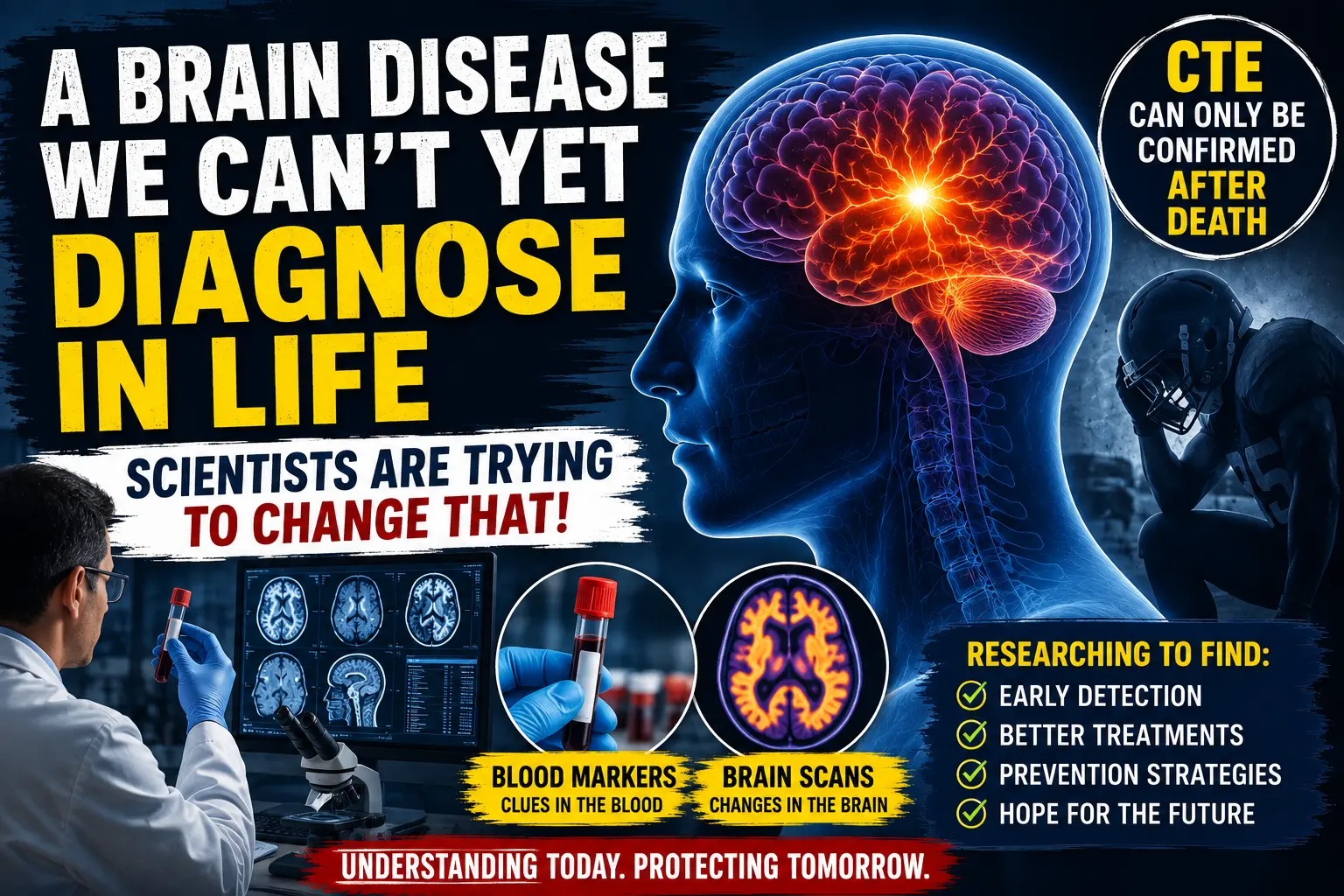
Chronic traumatic encephalopathy, or CTE, is linked to repeated head impacts and can affect the brain over time. It cannot currently be definitively diagnosed in a living person. A major research effort led by Boston University is now searching for ways to identify the disease during life.
A major challenge in brain medicine
For years, scientists have been studying the long-term effects of repeated blows to the head, particularly among people who participate in contact sports.
One condition at the center of that research is chronic traumatic encephalopathy, or CTE.
CTE is a progressive brain disease associated with repeated head impacts over time. It has been studied extensively among former American football players and other people exposed to repeated head impacts.
But there is an important distinction:
Not everyone who experiences repeated head impacts develops CTE.
Researchers are still trying to understand why the disease develops in some people and not others.
The biggest problem is that CTE cannot currently be definitively diagnosed while a person is alive.
At present, the disease can only be confirmed by examining brain tissue after death. Existing brain scans and blood or spinal-fluid tests cannot definitively establish a CTE diagnosis.
That is exactly what scientists are now trying to change.

There is no confirmed clinical test for that yet.
However, a major research project led by the Boston University CTE Center is attempting to find one.
The U.S. National Institutes of Health has awarded about $15.3 million to the project, known as the DIAGNOSE CTE Research Project-II.
Researchers are studying potential biological markers using blood tests and advanced brain imaging. They are also collecting information about memory, thinking, mood and behavior.
The goal is to determine whether these measurements can eventually be combined to identify CTE accurately during a person's lifetime.
The project is also designed to help doctors distinguish CTE from other brain diseases, including Alzheimer's disease.
Why is CTE so difficult to diagnose?
One reason is that the symptoms associated with CTE are not unique to the disease.
A person may experience:
Memory problems
Difficulty thinking or solving problems
Changes in behavior
Problems with everyday functioning
But similar symptoms can occur in several other neurological conditions.
That makes it difficult to determine whether CTE is actually responsible without examining the underlying brain pathology.
Researchers therefore need more than symptoms alone. They are looking for biological changes that can reliably distinguish CTE from other diseases.
Could a blood test detect CTE?

This is one of the most interesting areas of current research.
But there is an important point:
A blood test that can definitively diagnose CTE does not currently exist.
Researchers have been investigating proteins in the blood that might provide clues about what is happening inside the brain.
One recent study examined 231 participants, including 177 former American football players and 54 people who had not been exposed to repeated head impacts.
The researchers studied a blood marker called p-tau217.
The results were important because they suggested that p-tau217 is unlikely to detect CTE itself.
However, the marker showed strong links with biological signs of Alzheimer's disease. This means it may be useful for identifying or ruling out Alzheimer's-related changes in people who are also at risk of CTE, but it is not currently a CTE diagnostic test.
The study therefore highlights a major challenge:
A marker that works for Alzheimer's disease cannot automatically be used to diagnose CTE.
Researchers need markers that are more specifically associated with CTE.
What did researchers learn from 614 donated brains?
Another important 2026 study looked at 614 donated brains from people who had been exposed to repeated head impacts.
The researchers found:
366 brains had CTE
248 did not have CTE
People with more severe CTE had greater cognitive and functional problems
Those with stage IV CTE were about 4.5 times more likely to have had dementia than people without CTE
The study also found that stage III CTE was associated with dementia and cognitive symptoms.
However, the researchers did not find the same clear association between mild stage I or II CTE and dementia or cognitive problems.
That distinction is important.
The study does not mean that everyone with CTE will develop dementia.
Instead, it provides stronger evidence that severe CTE is associated with dementia and cognitive decline.
A former NFL quarterback has joined the research
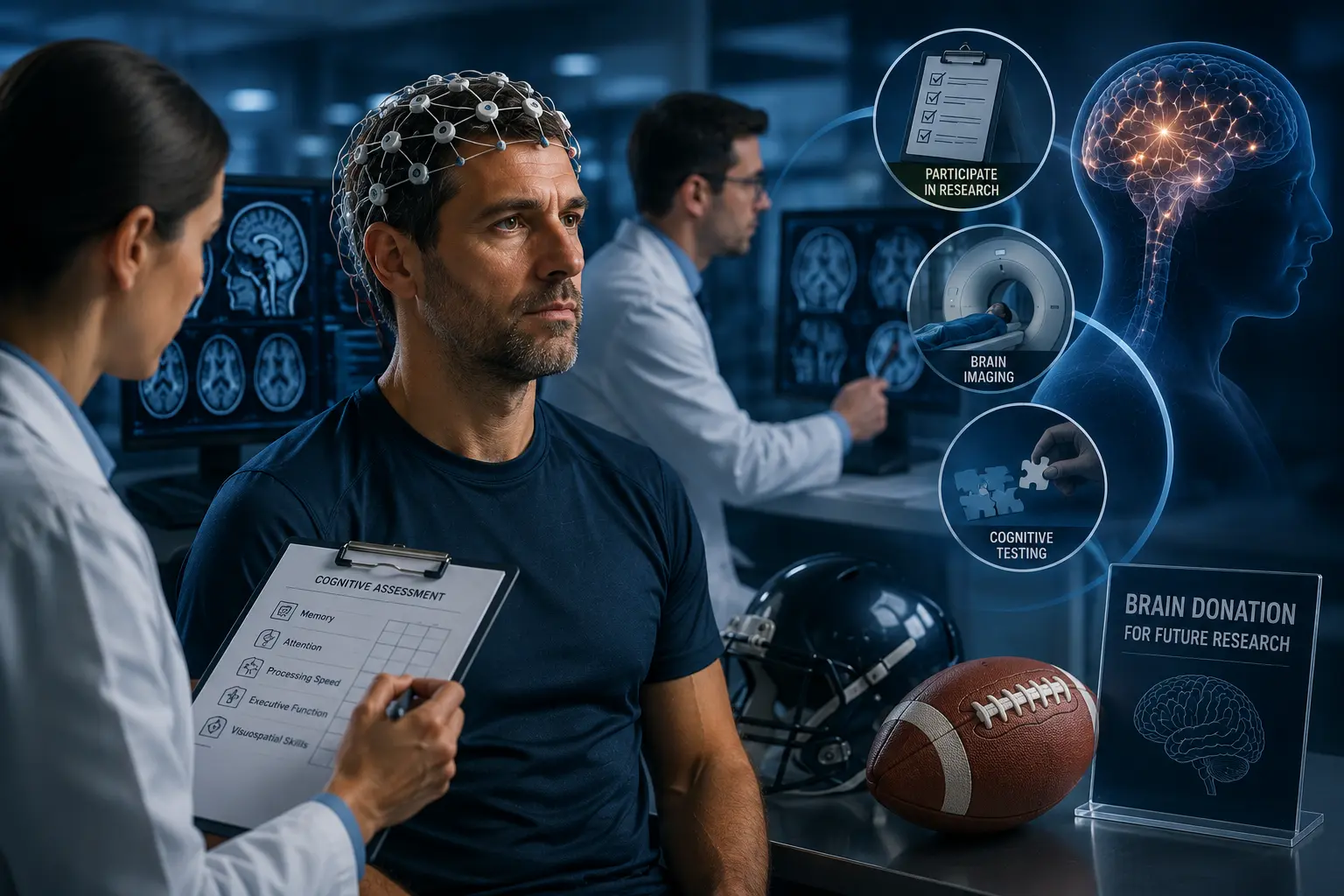
The effort to diagnose CTE during life has also attracted attention because former NFL quarterback Matt Hasselbeck has joined the research.
Hasselbeck, 50, spent years playing American football and has volunteered to participate in Boston University's research into diagnosing CTE in living people.
He has undergone cognitive assessments and brain imaging as part of the research.
He has also agreed to donate his brain for future research, allowing scientists to eventually compare information collected during his lifetime with findings from brain tissue after death.
There is an important clarification here:
Hasselbeck has not been diagnosed with CTE through this study.
He is participating as a research subject to help scientists understand how the disease might eventually be detected during life.
What role can brain scans play?
Advanced brain imaging is another major part of the research.
Scientists are using different types of brain scans to look for changes that might be associated with CTE.
But these scans are currently research tools, not definitive CTE diagnostic tests.
The Boston University CTE Center states that MRI, CT, PET and SPECT scans cannot currently be used on their own to definitively diagnose CTE.
This is why researchers are looking at several kinds of information at the same time.
A future diagnostic system could potentially combine:
blood markers + brain imaging + cognitive testing + medical history
rather than relying on a single test.
Why would a living diagnosis be such a major breakthrough?

Being able to identify CTE during life would change much more than diagnosis.
Researchers could follow people over many years and study how the disease develops.
They could also identify people who may be suitable for clinical trials and test whether potential treatments are actually slowing or preventing disease progression.
At present, one of the biggest obstacles to CTE research is the inability to definitively identify the disease in a living person.
A reliable method could therefore accelerate research into both prevention and treatment.
But the breakthrough has not happened yet
This is the most important fact to remember.
As of August 2026, there is still no definitive clinical test that can diagnose CTE in a living person.
CTE can currently be confirmed only through examination of brain tissue after death.
So headlines suggesting that scientists have already developed a test that can detect CTE in living people would be misleading.
The accurate story is different:
Scientists are now conducting large-scale research to find a reliable way to diagnose CTE during life.
The next big question
Researchers are now trying to answer a difficult question:
Can the biological changes associated with CTE be detected before a person dies?
To answer it, scientists are studying blood, brain scans, memory and thinking abilities, medical history and long-term exposure to repeated head impacts.
The hope is that combining these pieces of information will eventually produce a reliable method for identifying CTE during life.
But that goal has not yet been reached.
For now, the science is still in the research stage.
And if scientists eventually succeed, it could change not only how CTE is diagnosed, but also how the disease is studied and treated.