
World
Major Oil Spill Reaches Oman Coast, Raising Environmental Concerns
Tamilxa News Desk•Aug 13, 2026
Record-breaking rainfall in Chiba flooded roads and railway lines, disrupted power supplies and left around 7,000 travellers stranded overnight at Narita International Airport.
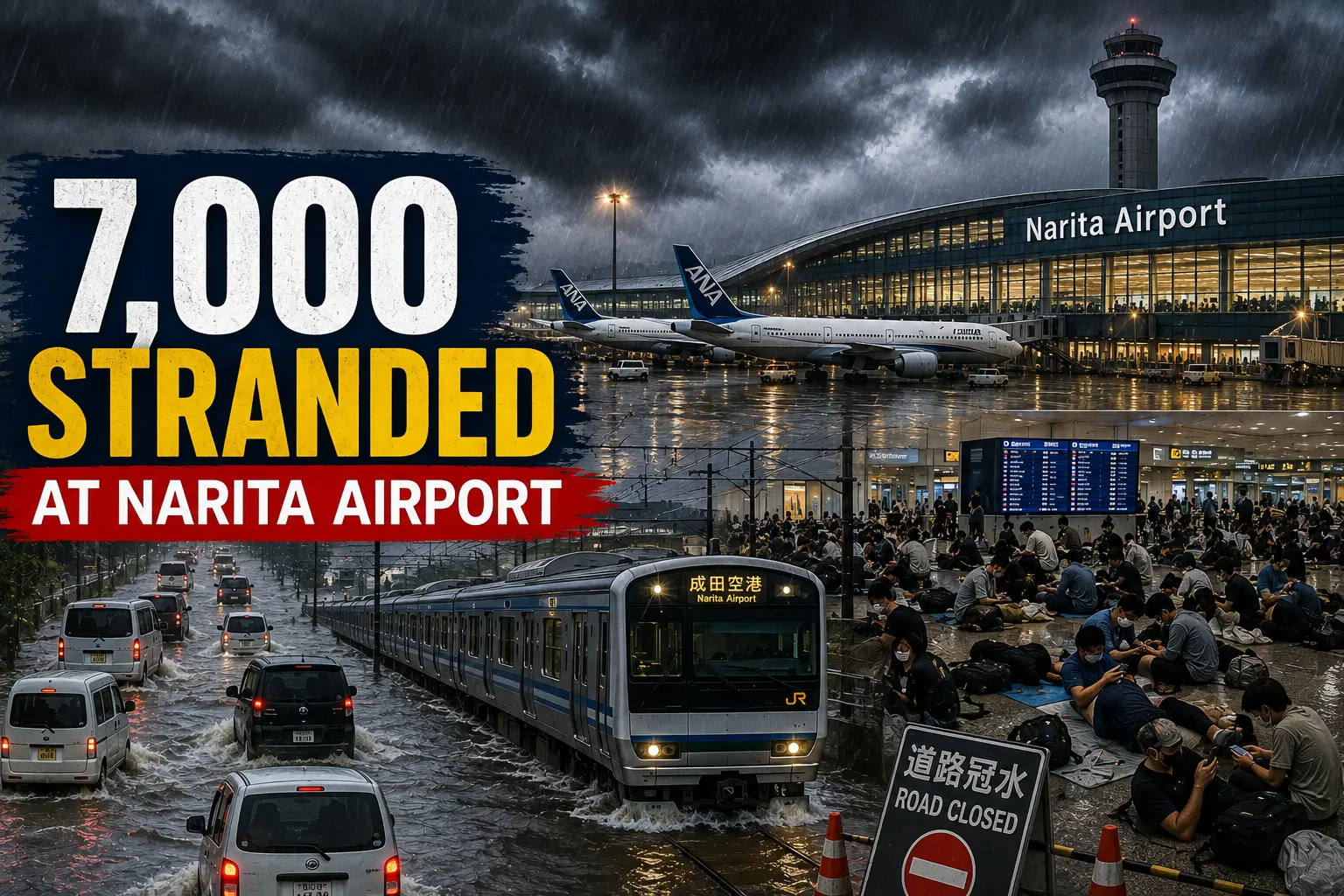
Record-breaking rainfall in Japan’s Chiba Prefecture, east of Tokyo, has caused widespread flooding and major transport disruption, with around 7,000 travellers forced to spend the night at Narita International Airport.
The unusual situation developed even though flights were largely continuing. The bigger problem was outside the airport, where flooding disrupted highways, rail services and other ground transportation routes connecting Narita with surrounding areas.
Rainfall reached unprecedented levels
More than 360 millimetres of rain fell in parts of Chiba within 24 hours, surpassing the previous regional record of 309 millimetres set in October 2013.
The intensity was particularly striking in parts of the prefecture, where rainfall rates reached extremely high levels over short periods. In Sakura, for example, rainfall reached about 97 millimetres in an hour.
The volume of water overwhelmed parts of the urban drainage and transport infrastructure, resulting in extensive flooding.
Why were passengers stranded if flights were operating?
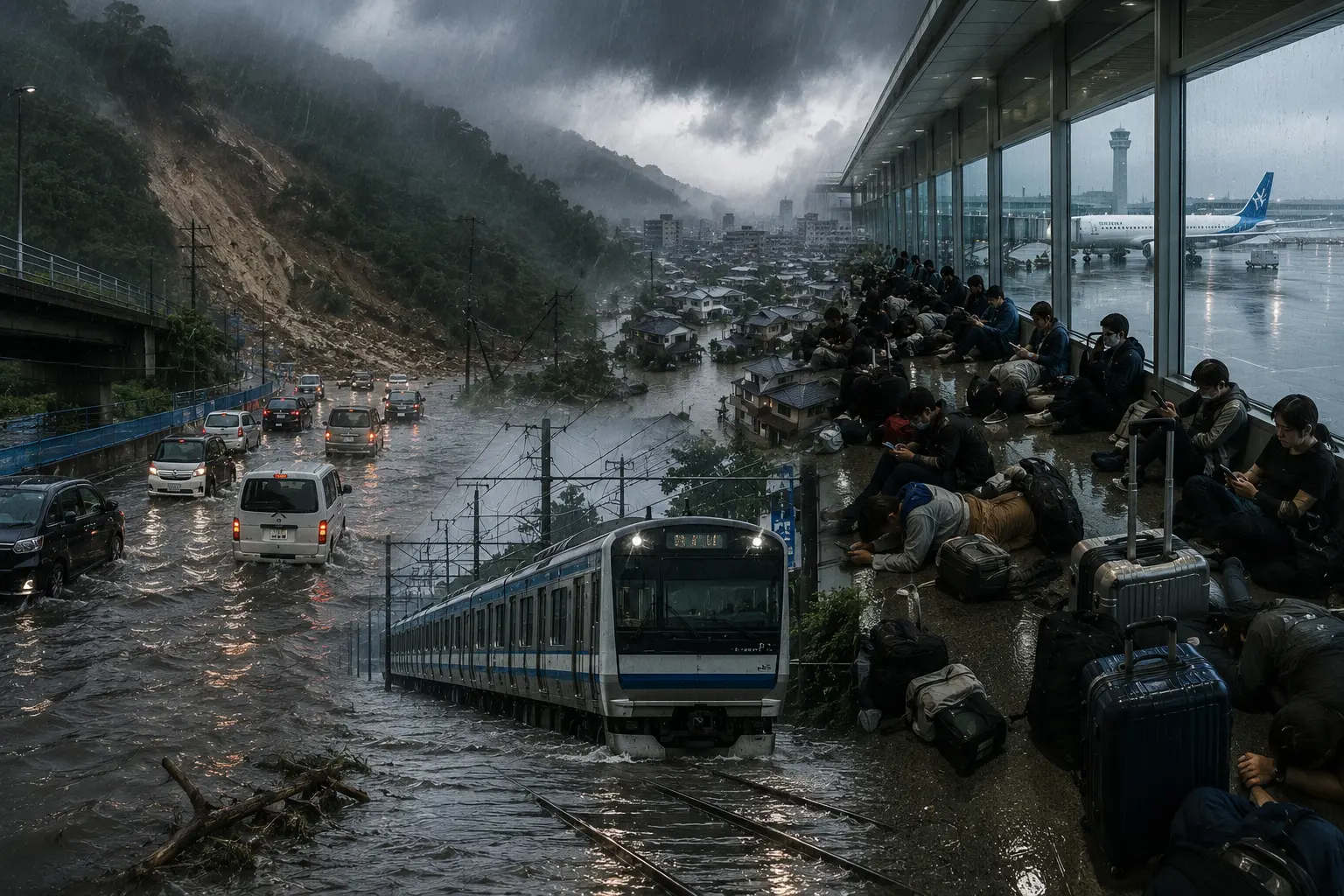
Narita Airport itself did not simply shut down because of the rain.
Instead, the major difficulty was getting passengers from the airport to their next destination.
Flooding affected roads and railway lines across Chiba. Several highways were closed or heavily congested, while rail services were suspended or disrupted.
That left many passengers who had already arrived at Narita with very few ways to leave the airport.
Some travellers were unable to reach their hotels, while others faced long waits for taxis and other forms of transport.
The airport became a temporary shelter
With ground transportation severely disrupted, thousands of passengers remained inside the airport terminals overnight.
Airport staff distributed sleeping bags and basic supplies to people who could not leave. Many travellers spent the night on terminal floors rather than reaching hotels or other accommodation.
The incident demonstrated how an airport can continue receiving and handling flights while passengers are nevertheless unable to complete their journeys because the surrounding transport network has been disrupted.
Road and rail networks were badly affected
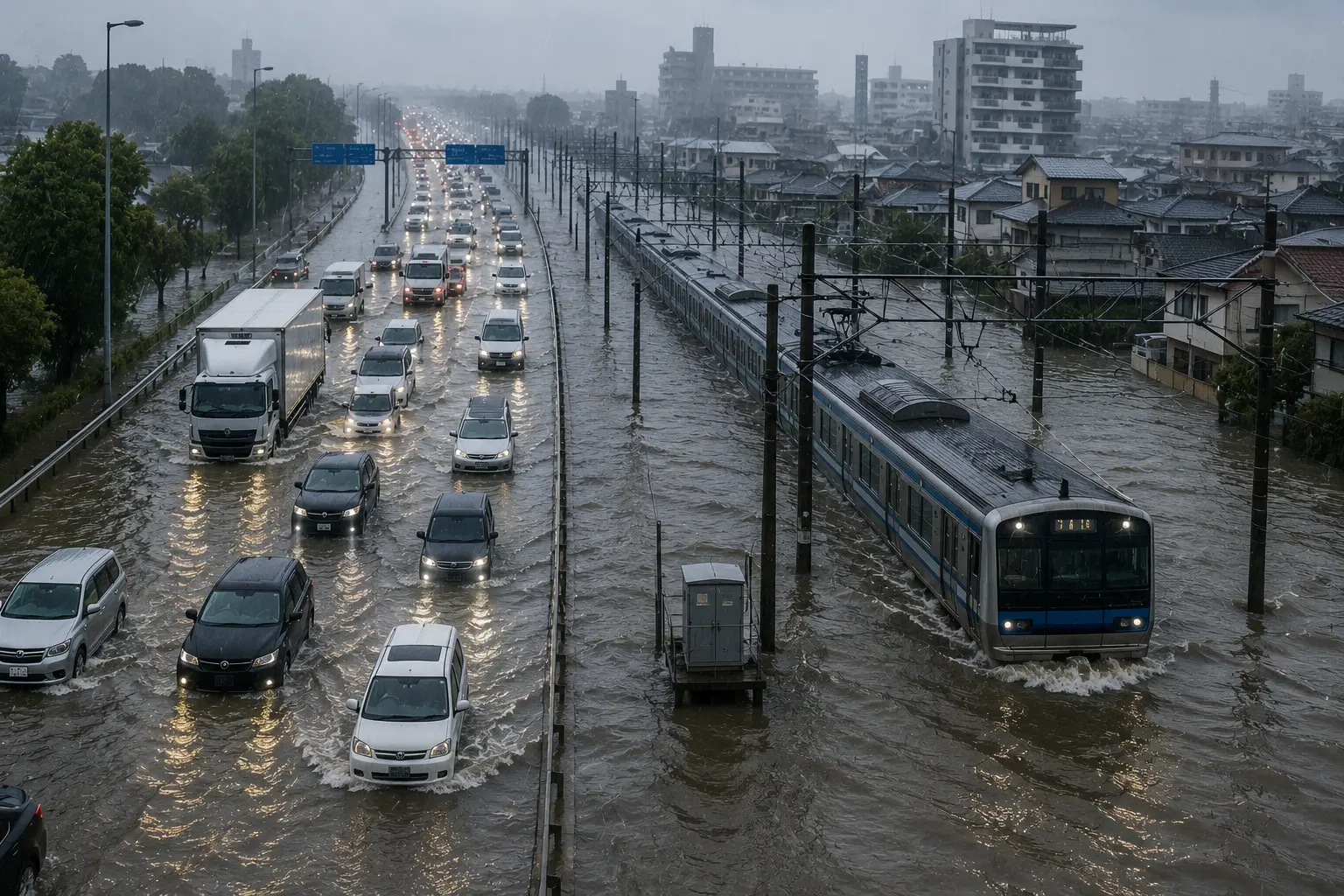
The flooding extended well beyond Narita Airport.
Water covered roads in several parts of Chiba, while railway services were also affected. Some routes were later restored, helping reduce the number of people stranded at transport hubs.
The disruption occurred during Japan’s busy Obon holiday period, when large numbers of people were travelling across the country.
That timing made the impact on transport facilities even greater.
Power outages added another problem
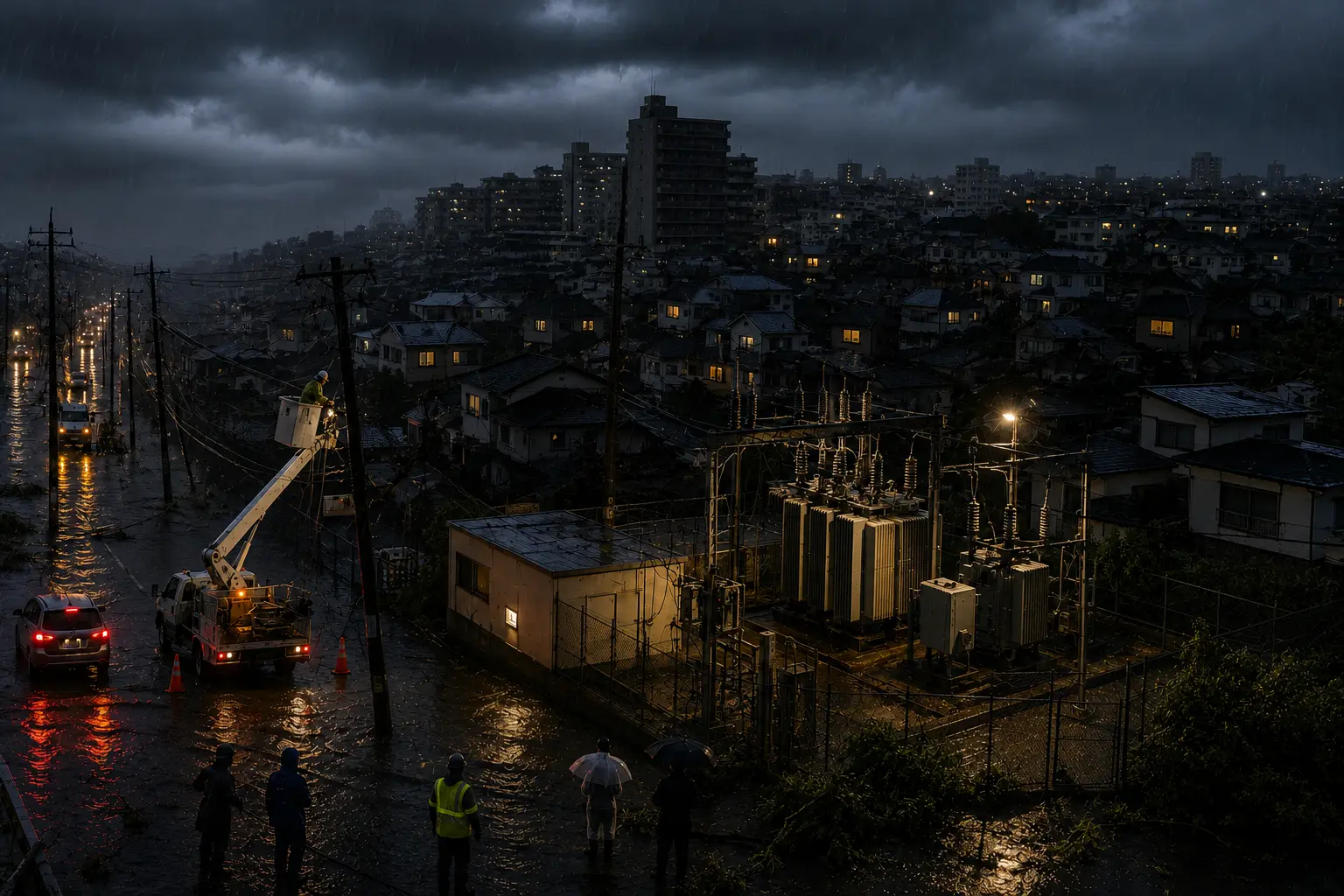
The extreme weather also damaged the region’s electricity infrastructure.
More than 20,000 homes lost power after flooding affected a substation, according to reports. Gas supplies were also disrupted for nearly 13,000 households.
The scale of the outages showed that the rainfall was affecting much more than transport. Electricity, gas, roads, railways and emergency services were all placed under pressure at the same time.
Why can extreme rain cause flooding so quickly in cities?
When rainfall arrives faster than drainage systems can remove it, water begins to accumulate on streets and in low-lying areas.
Urban areas can be particularly vulnerable because roads, buildings and other hard surfaces prevent large amounts of rainwater from naturally soaking into the ground.
Once drainage capacity is exceeded, water can rapidly spread across roads and into transport corridors.
Experts quoted in coverage of the Chiba flooding also pointed to the role of extensive paved surfaces and overwhelmed drainage systems in worsening the flooding.
Why did this happen even in highly developed Japan?
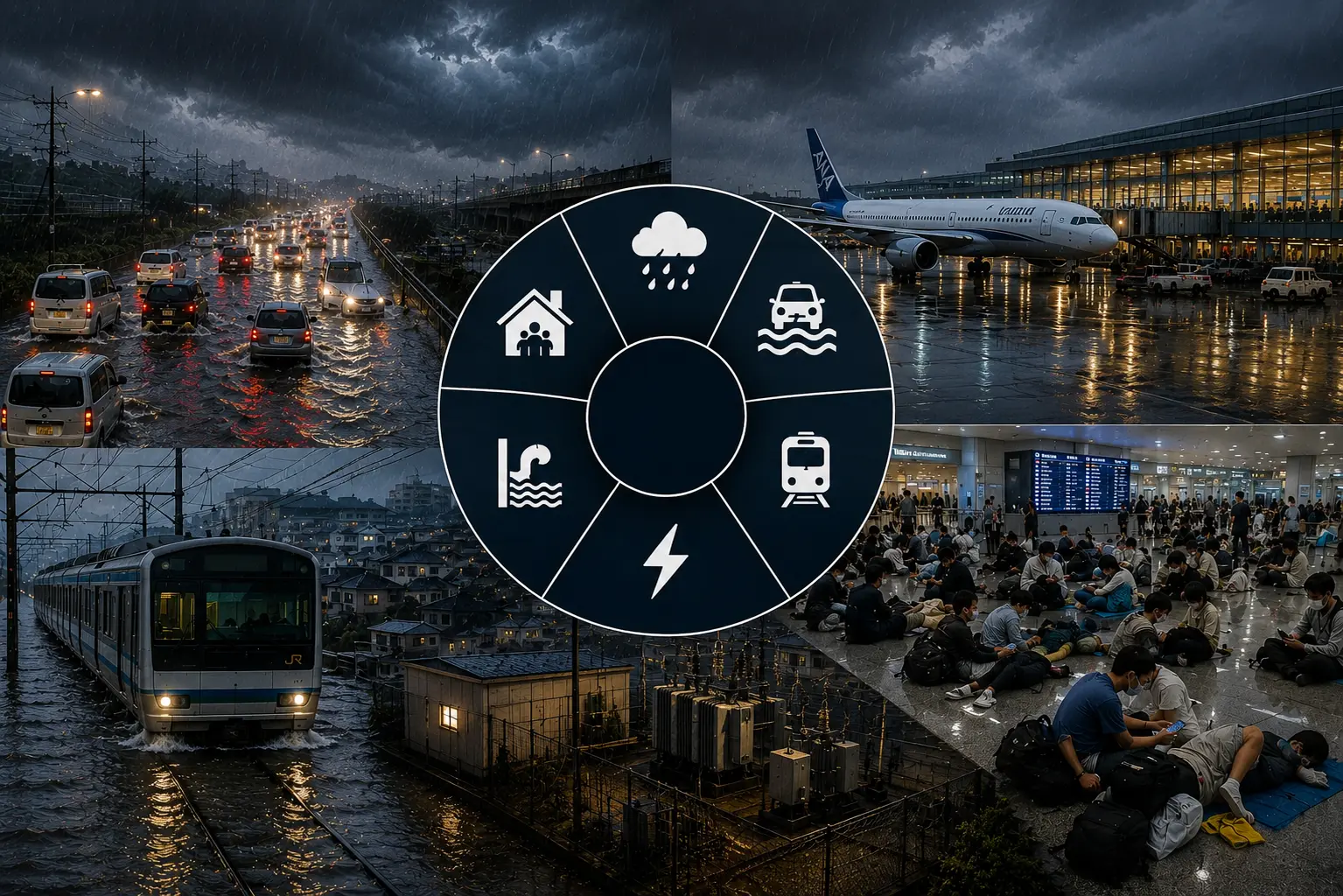
Japan has extensive disaster-preparedness systems and highly developed transport infrastructure. But extreme weather can create problems that go beyond the capacity of any single system.
In Chiba, intense rainfall was followed by flooding, road closures, railway disruption and power outages.
These systems are interconnected. When one part fails, the consequences can quickly spread to other parts of the network.
The Narita Airport situation is a clear example. A passenger may have a functioning flight and still be unable to complete the journey if the road or railway outside the airport is unusable.
The wider impact on residents
The disruption was not limited to travellers.
Floodwater entered homes and affected communities across Chiba. Emergency shelters were opened in several locations, while rescue teams worked in areas affected by flooding and landslides.
Authorities also issued evacuation guidance as the situation developed, with concerns remaining over saturated ground, swollen waterways and additional flooding or landslides.
What the Narita incident shows
The situation at Narita highlights an important weakness that can affect any major city.
An international airport does not operate independently from the city around it.
Airports depend on roads, railways, electricity, communications, emergency services and other infrastructure. If several of those systems are disrupted at the same time, the effect can spread rapidly even when the airport itself remains operational.
For travellers, that can mean an unexpected situation where their aircraft arrives normally but they cannot leave the airport.
What happens next?
Rainfall eased in parts of Chiba after the worst of the storm, allowing some transportation services to resume.
However, authorities continued to monitor the risk of further flooding and landslides because the ground remained saturated and some waterways were swollen. Recovery efforts also continued in areas where roads, electricity and other infrastructure had been damaged.
Conclusion
The record rainfall in Chiba has shown how quickly extreme weather can affect an interconnected urban system.
Around 7,000 travellers were left at Narita International Airport not simply because flights stopped, but because the roads and railways needed to take them away from the airport were severely disrupted.
At the same time, flooding affected homes, electricity supplies and other essential infrastructure across the region.
The incident is therefore more than an airport disruption. It is an example of how extreme rainfall can create a chain reaction across an entire city and its transportation networ