
World
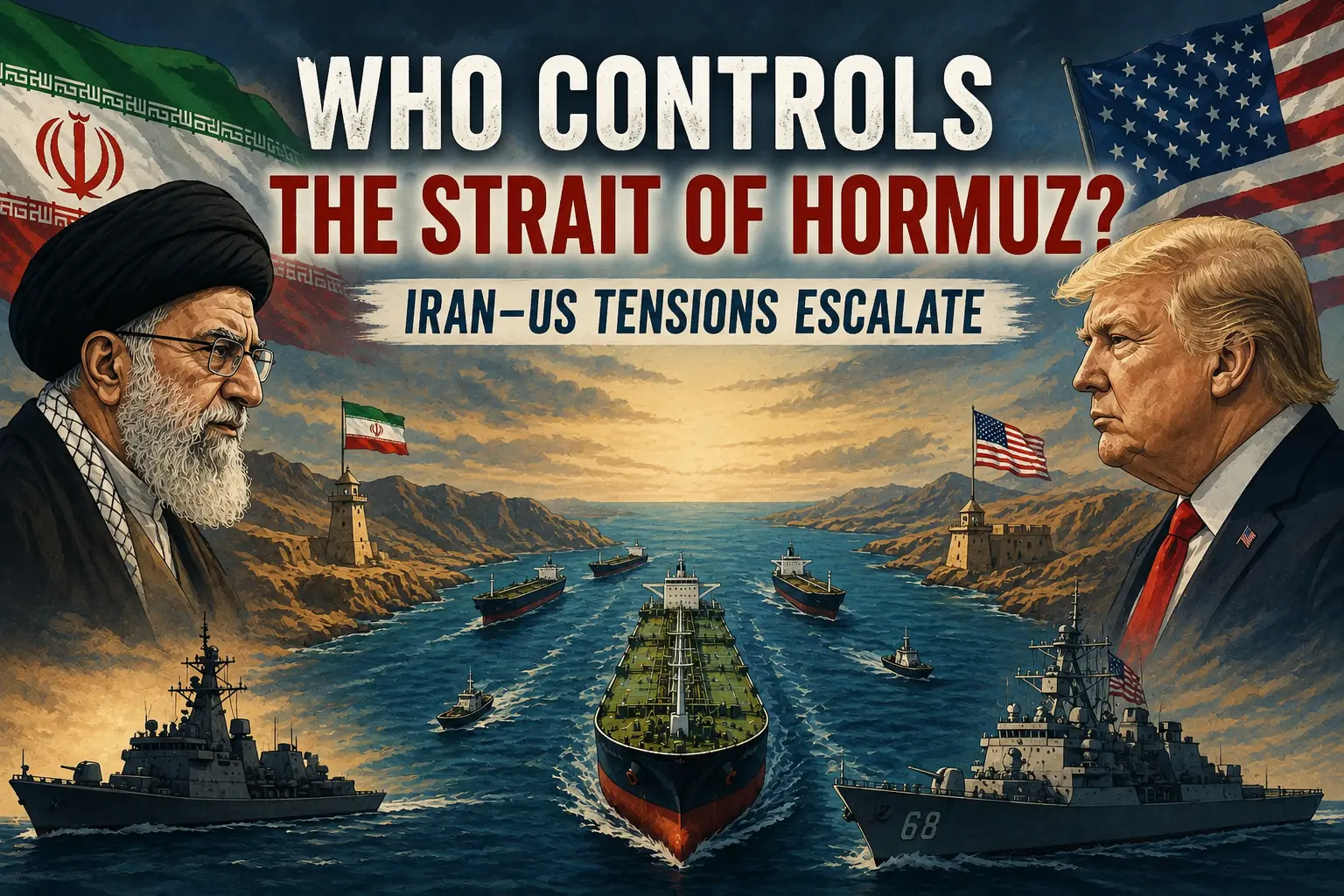
Who Controls the Strait of Hormuz? Iran–US Tensions Escalate
Iran and the United States are making competing claims over the Strait of Hormuz as commercial shipping remains severely disrupted and tensions continue to weigh on global energy markets.
Language
Who Controls the Strait of Hormuz? Iran–US Tensions Escalate
The confrontation between Iran and the United States over the Strait of Hormuz has intensified, with both sides now making competing claims about who controls the strategically important waterway.
Iran says the strait remains under its control and that ships cannot pass without Iranian approval. U.S. President Donald Trump, meanwhile, has repeatedly claimed that the United States has “total control” of the waterway.
The situation on the ground, however, is more complicated than either statement suggests. Commercial shipping through the strait remains far below normal levels, while attacks, security threats and high insurance costs continue to discourage ship operators from using the route.
Why is the Strait of Hormuz so important?
The Strait of Hormuz is a narrow maritime passage between Iran and the Arabian Peninsula that connects the Persian Gulf with the Gulf of Oman and the Arabian Sea.
At its narrowest point, the strait is only about 54 kilometres wide, with designated navigation channels for vessels. Its geographical position makes it one of the world's most important energy chokepoints.
Before the current conflict, around 20 million barrels of crude oil and petroleum products per day passed through the Strait of Hormuz on average in 2025. That represented roughly a quarter of global seaborne oil trade.
That is why any prolonged disruption can have consequences far beyond Iran and the United States.
Iran says the strait remains under its control
On August 13, Hossein Taeb, head of Iran's Basij paramilitary organisation, said the Strait of Hormuz was under Iranian control and management.
Iranian officials have also rejected Trump's statements about U.S. control of the waterway. Tehran maintains that vessels attempting to use the route must comply with conditions set by Iran.
Iran has used its position around the strait as a major source of leverage during negotiations with Washington.
At the same time, Iran's claims should not automatically be interpreted as meaning that the entire waterway is physically controlled by Iranian forces at every point. The continuing low level of commercial traffic and the presence of U.S. military forces make the actual security situation considerably more complicated.
Trump claims the U.S. has “total control”
Trump has taken the opposite position.
The U.S. president has said that American forces have total control of the Strait of Hormuz. Washington has also sought to establish protected shipping arrangements intended to allow vessels to move through the region.
But available shipping data show that the existence of a U.S. military presence has not returned the waterway to normal commercial operations.
That distinction is important. Military influence, the ability to attack or deter vessels, and the ability to restore unrestricted commercial navigation are not necessarily the same thing.
Commercial shipping has collapsed
One of the clearest indicators of the current situation is the number of ships actually using the strait.
Before the conflict, roughly 130 to 140 vessels a day were passing through the waterway. On August 11, only eight vessels were reported to have crossed it. More recent tracking also shows traffic remaining dramatically below pre-war levels.
Shipping companies are facing more than just the possibility of military attacks.
War-risk insurance has become extremely expensive, while operators also have to consider missile and drone threats, potential detentions and uncertainty over which routes are considered safe.
The result is that many operators are choosing to delay voyages, use alternative arrangements where possible or avoid the area altogether.
Why reopening the strait has become difficult
The Strait of Hormuz has not simply become a technical shipping problem. It is now closely tied to the wider political confrontation between Washington and Tehran.
Previous negotiations produced temporary arrangements that allowed shipping conditions to improve. The International Energy Agency reported that oil flows through the strait recovered significantly during the earlier period of reduced hostilities.
However, renewed fighting and attacks on commercial vessels have once again disrupted the recovery.
The International Maritime Organization has repeatedly warned that the security environment remains dangerous for civilian crews. It has also called for freedom of navigation and the protection of commercial shipping under international law.
The human cost for seafarers
The crisis is not only about oil and geopolitics.
The IMO has reported numerous incidents involving commercial vessels in and around the Strait of Hormuz. Its confirmed incident records through July 27 listed 62 incidents and 17 confirmed seafarer fatalities.
The organisation has also warned that thousands of seafarers have been affected by the conflict and that vessels remain stranded in the Persian Gulf because of the security situation.
For shipping companies, the question is therefore not simply whether a vessel can technically pass through the strait, but whether the voyage can be made with an acceptable level of risk.
What does this mean for oil prices?
The Strait of Hormuz is particularly important because so much Gulf energy production depends on it.
The International Energy Agency has warned that the renewed conflict could cause a major reduction in global oil supply during 2026. Its August assessment projected a 4.3 million barrel-per-day decline in global oil supply, with the disruption around Hormuz and the wider Middle East playing a major role.
However, this does not mean oil prices will automatically rise every day.
Prices also depend on global demand, inventories, production outside the affected region and the availability of alternative supply routes.
The U.S. Energy Information Administration previously noted that increased shipping through Hormuz had helped global oil production and trade recover after an earlier reopening. That demonstrates how quickly the energy market can respond when the waterway becomes more accessible.
Could the crisis affect countries outside the Middle East?
Yes.
Countries in Asia are particularly exposed because a significant portion of their imported oil and gas originates from the Gulf region.
A prolonged disruption could increase transportation and energy costs, potentially affecting fuel prices, manufacturing, electricity generation and other parts of the global economy.
But the scale of the impact will depend heavily on how long the disruption lasts and whether Gulf producers can increase exports through alternative routes.
What happens next?
Three developments will be especially important in the coming days.
First, the number of commercial vessels successfully passing through the Strait of Hormuz will show whether the security situation is actually improving.
Second, any progress in U.S.–Iran negotiations could change the situation quickly. Earlier diplomatic efforts have already demonstrated that a reduction in hostilities can lead to a significant recovery in energy flows.
Third, further attacks on commercial vessels could push shipping companies even further away from the route.
For now, the safest conclusion is that neither the U.S. claim of “total control” nor Iran's claim of complete control should be treated as an independently established fact. What is clearly confirmed is that both governments are asserting competing positions while commercial traffic remains severely depressed and the maritime security situation remains unstable.
The future of the Strait of Hormuz will therefore depend not only on military developments, but also on whether Washington and Tehran can reach an arrangement that gives commercial shipping enough confidence to return to the route.
Recommended Stories
World
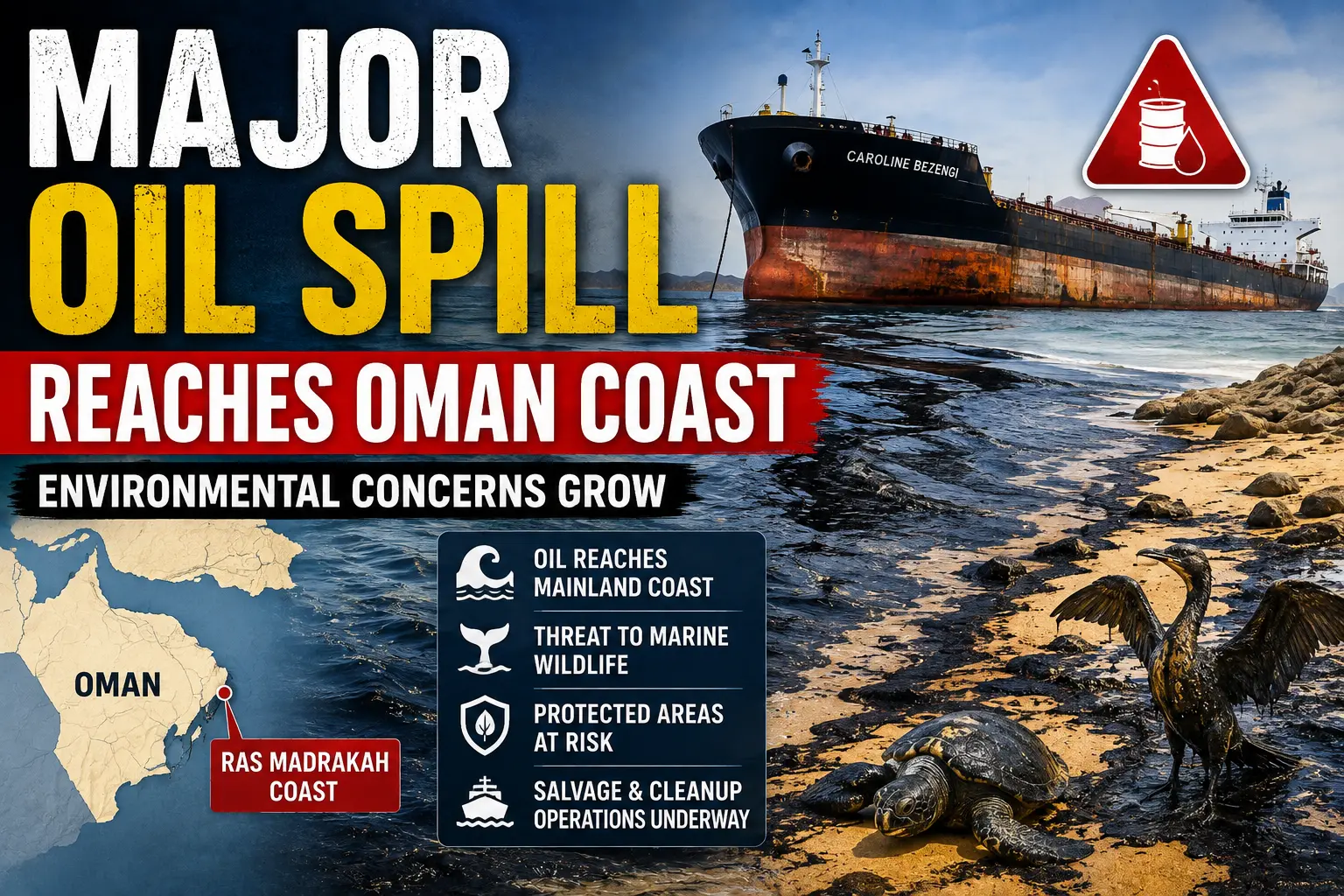
Major Oil Spill Reaches Oman Coast, Raising Environmental Concerns
Tamilxa News Desk•Aug 13, 2026